Strengthening Women’s Leadership in Indian Science: A Pathway to Inclusive Innovation
The International Day of Women and Girls in Science is both a moment of celebration and a call for reflection. For India, where scientific capacity underpins economic growth, technological sovereignty and global competitiveness, the conversation has evolved. The question is no longer whether women are entering science, but whether they are able to advance, lead and shape the country’s research and innovation priorities. Expanding women’s participation in education has laid the foundation; the next step is enabling their leadership. Doing so will enhance not only fairness, but also the quality, resilience and global competitiveness of India’s knowledge economy. Sneha Sinha and Karina Biswal write.
India and Bhutan held high‑level talks in New Delhi to enhance long‑standing hydropower cooperation, including optimizing output and accelerating key projects like Punatsangchhu‑I and Punatsangchhu‑II. Both sides also discussed future cross‑border transmission planning and streamlining power scheduling to deepen bilateral partnership.
Switzerland and South Korea held the 7th Science and Technology Joint Committee meeting in Bern, reviewing progress since their 2008 S&T cooperation agreement and discussing ways to deepen collaborative research and innovation. The talks brought together government and research stakeholders to plan intensified joint work, followed by a scientific workshop on Swiss‑Korean collaboration in areas such as biomedical and cognitive enhancement.
The Department of Science & Technology (DST), Government of India, launched the India–Netherlands Hydrogen Fellowship Programme and facilitated an MoU between the University of Groningen and 19 IITs to boost joint research and academic cooperation in green hydrogen and clean energy technologies. This collaboration aims to enhance capacity building and advance India’s hydrogen innovation ecosystem aligned with national clean energy goals.
In the India–Malaysia Joint Statement during PM Narendra Modi’s official visit to Malaysia, both countries agreed to strengthen science and technology cooperation as part of their Comprehensive Strategic Partnership, including collaboration in the digital economy, emerging technologies, and innovation ecosystems. The statement reaffirmed wide‑ranging engagement across S&T sectors alongside trade, defence, energy, and people‑to‑people ties.
Cuba and Russia have launched a renewed phase of collaboration, highlighted by agreements on joint research, academic exchanges and cooperation between universities and scientific institutions to deepen bilateral ties. The initiative aims to strengthen educational links and advance research across shared scientific priorities.
India and Seychelles adopted the Joint Vision for Sustainability, Economic Growth and Security through Enhanced Linkages (SESEL) during the Seychelles President’s state visit to India, affirming deep bilateral ties and cooperation across development sectors. As part of this vision, they agreed on technical and scientific collaboration between the India Meteorological Department and Seychelles Meteorological Authority and cooperation in ocean observation, maritime scientific research, and digital technology solutions, reflecting shared science & technology engagement
The Indian Institute of Technology Madras (IIT Madras) has launched “Bodhan AI,” a Centre of Excellence in AI for education in partnership with Sarvam AI, aimed at creating a sovereign, scalable AI-driven education ecosystem to improve learning, assessment, teaching and administration across India.
Senior South Korean and Quebec government officials met in Seoul to explore ways to deepen bilateral collaboration in artificial intelligence, science and technology, including potential partnerships involving Québec’s advanced AI research institutions. Discussions also touched on leveraging Korea’s strengths in AI hardware and Quebec’s research ecosystem to boost joint innovation and economic cooperation.
Researchers have developed CryoLVM, a new AI model that significantly improves the processing and interpretation of cryo‑electron microscopy data. The model learns structural representations directly from experimental density maps, enabling faster and more accurate determination of complex biomolecule structures, which could accelerate discoveries in biology and drug design.
Chile’s Ministry of Science, Technology, Knowledge and Innovation and Colombia’s ICT Ministry have signed a memorandum of understanding to enhance bilateral cooperation in artificial intelligence and supercomputing, including plans to build a regional supercomputing network for shared research infrastructure and expertise.
The Indian Institute of Technology Bombay and Columbia University have signed a memorandum of understanding to establish the Columbia–IIT Bombay Centre of AI for Manufacturing, a joint research and translation hub to develop robust, scalable and human-centric artificial intelligence systems for real-world industrial applications. The centre, supported by the Ministry of Education, aims to strengthen India’s manufacturing ecosystem, support MSMEs and startups, and advance AI-driven innovation across sectors like semiconductors, robotics and logistics.
The Indian Institute of Technology Hyderabad (IITH) has signed a three-year Memorandum of Understanding with Japan’s Mitsubishi Electric Corporation to deepen industry–academia collaboration in areas like artificial intelligence, quantum technologies and cybersecurity, focusing on joint research, talent exchange, internships and workshops.
India will host the AI Impact Summit 2026 in New Delhi from 16–20 February 2026, bringing together global leaders, governments, industry, and civil society to shape inclusive, responsible, and high‑impact artificial intelligence policies and solutions. The Summit is expected to feature key figures from major tech companies and governments, focusing on practical AI applications, governance frameworks, and international cooperation to harness AI for sustainable development and growth.
US‑India Space Business Forum convened in Bengaluru to deepen collaboration between Indian and American space agencies, industry players, and startups, with a strong emphasis on accelerating commercial partnerships and joint space initiatives. Speakers highlighted the maturing India–US space cooperation and growing opportunities in space technology, innovation, and global markets.
The Technology Advisory Group of the Empowered Technology Group held its third meeting to chart a strategic roadmap for robotics in India, focusing on indigenisation, sector-specific priorities, and human-robot collaboration. Experts from academia and industry highlighted the need for software sovereignty, mission-driven R&D, and stronger infrastructure to boost India’s robotics ecosystem.
DAKSHIN – Global South Centre of Excellence at RIS convened a roundtable on the Blueprint for AI in Medical and Nursing Education as an official side event of the India AI Impact Summit 2026. Organised with Jhpiego and the NIMS Institute of Public Health & Governance, the dialogue brought together experts to chart a responsible, equitable and safe roadmap for integrating AI into medical and nursing education in India.
Kochi Metro Rail Ltd (KMRL) and the Indian Institute of Science (IISc), Bengaluru signed a Memorandum of Understanding to jointly conduct research on sustainable urban mobility and public transport systems, combining KMRL’s transit operations experience with IISc’s data‑driven research expertise. The collaboration will focus on planning, emerging technologies like AI, IoT and blockchain, and intelligent modelling to tackle real‑world mobility challenges and improve livability and resilience in cities.
Hindustan Zinc Ltd., in collaboration with the Jawaharlal Nehru Centre for Advanced Scientific Research (JNCASR), has developed stable zinc‑ion battery pouch cell prototypes aimed at large‑scale renewable energy storage, using low‑cost electrolyte formulations to improve stability and cycle life. This partnership marks a significant step toward indigenous, cost‑effective energy storage solutions that can support the integration of solar and other renewables.
Researchers from ARCI Hyderabad and IIT Hyderabad have developed a lead‑free, eco‑friendly photodetector with self‑powered operation that offers stable performance and potential use in consumer electronics, security systems, industrial monitoring, and biomedical imaging. The device uses low‑cost materials and simple fabrication at room temperature, aligning with India’s goals for sustainable and reliable next‑generation technologies.
Indian National Science Academy (INSA) and the National Institute of Science Communication and Policy Research (CSIR-NIScPR) signed a Memorandum of Understanding (MoU) in New Delhi. The collaboration aims to promote science communication, strengthen evidence-based science and technology policy research, and enhance the use of research insights in policymaking. Senior representatives highlighted the complementary strengths of both institutions and the importance of sustained institutional cooperation to create meaningful impact in science, technology and innovation policy.
The Indian Institute of Technology (IIT) Madras has announced a new online Bachelor of Science (BS) programme in Aeronautics and Space Technology that does not require JEE Main or Advanced scores for admission, making aerospace education more accessible to Class 12 pass‑outs and diploma holders. The skill‑focused course features flexible pacing, industry‑relevant training (including project work and internships), and prepares graduates for careers in civil aviation, UAVs, space systems, and advanced engineering fields.
The Indian Institute of Technology, Kanpur (IIT-K) has signed a Memorandum of Understanding with the University of Manitoba, Canada, to expand collaboration in global public health and deep-tech research. A senior delegation from the Canadian university visited IIT-K, and both sides discussed long-term academic and research cooperation.
Researchers at the Indian Institute of Science (IISc) have redesigned gallium nitride (GaN) power transistors to significantly improve their efficiency, performance, and reliability, key features for electric vehicles, data centre power systems and renewable energy applications. By modifying the transistor structure, the team’s innovation could help accelerate the adoption of GaN technology as a superior alternative to silicon in high‑power electronics.
Researchers at Jawaharlal Nehru Centre for Advanced Scientific Research (JNCASR) have identified an unusual mechanism of heat transport in solids where heat-carrying particles (phonons) shift from particle-like behavior to wave-like motion. This breakthrough could lead to ultra-efficient thermal insulators and advanced thermal management solutions.
The Indian Institute of Technology Guwahati has signed a five-year MoU with private launch firm Skyroot Aerospace to jointly develop advanced space-grade components using additive manufacturing and boost research in aerospace technologies. The partnership also opens up internships, joint projects and opportunities for students to work on real space missions and industry-aligned R&D.
The problem: Traditional construction methods are resource‑intensive, slow, labour‑heavy, and high in carbon emissions, and existing 3D concrete printing (3DCP) has mostly been limited to non‑structural applications, making it difficult to adopt in real‑world building projects with structural requirements.
The Method: Scientists from the National University of Singapore (NUS) demonstrated that 3DCP can fabricate structural building components that are greener and use significantly less material and labour, by optimizing printable concrete mixes and integrating printing workflows with conventional construction practices; the work was done in collaboration with industry partners and supported by Singapore’s Building and Construction Authority (BCA) and the National Additive Manufacturing Innovation Cluster (NAMIC).
Future Prospects: The research showed on‑site printing reduced manpower needs and material use by about 30 per cent, with past projects achieving 50 per cent man‑hour savings, and the team is now focusing on scaling up real‑world adoption, improving sustainability (including low‑carbon printable mixes using waste materials), and further integrating 3DCP into mainstream construction practices.
The Problem: Ammonia synthesis via the traditional Haber‑Bosch process is extremely energy‑intensive, consuming about 2 per cent of global energy, and current industrial methods rely on high heat and pressure, contributing to greenhouse gas emissions while meeting fertilizer demand.
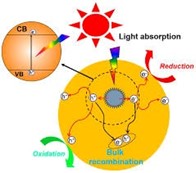
The Method: Researchers developed nanocrystal biohybrids by combining cadmium sulfide (CdS) nanocrystals with a molybdenum‑iron (MoFe) nitrogenase enzyme so that light‑activated electrons from the nanocrystals drive the enzyme’s nitrogen (N₂) reduction to ammonia (NH₃), effectively harnessing solar energy to catalyze the reaction without traditional high temperatures and pressures.
Future Prospects: Understanding how light‑driven nanocrystal systems interface with nitrogenase could enable next‑generation, low‑energy ammonia production technologies, offering sustainable pathways for fertilizer manufacturing and future integration with renewable energy systems to reduce carbon footprints in agriculture and chemical industries.
The International AI Safety Report 2026, released on 3 February 2026, is the second edition of a global scientific assessment of general-purpose artificial intelligence capabilities and risks. Compiled by over 100 independent AI experts, the report includes input from advisory representatives of more than 30 countries and international organisations, including the EU, OECD, and United Nations, providing a shared scientific baseline ahead of the India AI Impact Summit 2026.
Key Findings:
Rapid Advancement of AI Capabilities: General-purpose AI systems are evolving quickly, with some reaching capabilities that were unexpected in timeline and scope.
Multiple Risk Pathways: Potential risks include operational failures, unintended outputs, misuse by actors, and systemic effects from widespread deployment.
Uncertainty in Impacts: There remain significant gaps in understanding AI behavior in complex or high-stakes scenarios, making risk projections uncertain.
Need for Monitoring & Assessment: Continuous empirical monitoring of AI performance, robustness, and failure modes is recommended to maintain situational awareness.
Evidence-Based Approach: Policy decisions and governance discussions benefit from structured, scientific assessments rather than assumptions or anecdotal evidence.
International Collaboration: Coordinated global research, information sharing, and dialogue among stakeholders can improve understanding and management of emerging AI risks.
Supporting Policymakers: The report provides a scientific foundation to inform policy, regulation, and stakeholder engagement, particularly ahead of forums such as the India AI Impact Summit 2026.
We welcome your comments and valuable suggestions. Please write to us for receiving publications, up dates and notices regarding seminars, conferences etc. Contact us at science.diplomacy@ris.org.in.