Driving a Sustainable Future Through Science, Technology and Innovation: Deepening Indo-German Partnership
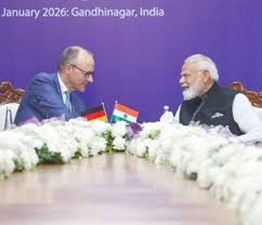
The visit of the Chancellor of the Federal Republic of Germany H.E. Mr. Friedrich Merz to India on 12-13 January 2026, at the invitation of Prime Minister Shri Narendra Modi, coincides with the commemoration of 75 years of diplomatic ties between the two countries. This is Chancellor Merz’s first official bilateral visit to India as well as his first engagement with the Indo-Pacific, underlining the growing significance of the India-Germany partnership and the steady deepening of cooperation across political, economic, technological and strategic domains. Sneha Sinha writes.
During the official visit of External Affairs Minister of India, Dr. S. Jaishankar, to the Republic of France and the Grand Duchy of Luxembourg from 04–09 January 2026, science and technology cooperation featured prominently. Discussions with France, in the context of the India–France Year of Innovation, focused on innovation and technology, startups, health, education, mobility, and space, and engagements in Luxembourg reviewed collaboration in innovation, digital technologies and space, reflecting India’s growing technological partnership with Europe.
The SKA Observatory’s radio telescope array in South Africa’s Northern Cape reached a major commissioning milestone by recording its first successful combination of signals (“first fringes”) from two dishes, showing the system now works as an interferometer. This step confirms that hardware and software are functioning together and sets the stage for further scientific operations.
Under the Mekong‑Ganga Cooperation (MGC) framework, India and Myanmar inaugurated two key projects, a Drying Machine and Facility Project and the ACARE Knowledge Repository Project to enhance agricultural processing, research collaboration and capacity building at the University of Agriculture in Yezin. The ceremony highlighted sustained technological cooperation and India’s support for rural development, science extension programmes and agri‑research linkages between the two countries.
NASA has finished construction of the Nancy Grace Roman Space Telescope, a next-generation observatory that will map the cosmos, discover over 100,000 exoplanets, and study dark energy and dark matter. The telescope is set for launch later in 2026, with operations beginning soon after.
SAP SE and Syngenta announced a multi‑year strategic technology partnership to embed artificial intelligence across Syngenta’s global operations, modernizing supply chains, manufacturing and grower‑facing services. The collaboration aims to accelerate AI‑assisted innovation and sustainable agricultural productivity worldwide.
The European Commission has launched two Horizon Europe funding calls totaling €307.3 million to boost digital innovation across the bloc, with €221.8 million focusing on trustworthy AI, data services and strategic digital autonomy, and €85.5 million for emerging tech like next-gen AI agents, robotics and new materials.
OpenAI has signed a multi-year partnership with Cerebras Systems to integrate up to 750 megawatts of high-speed AI inference compute into its platform, significantly boosting real-time response performance for large AI models. The deal, part of OpenAI’s broader infrastructure expansion, reflects the industry’s intensifying focus on low-latency inference at scale.
The theme for India's BRICS Chairship is "Building for Resilience, Innovation, Cooperation and Sustainability". It draws inspiration from Prime Minister's "Humanity First and People-centric" vision for BRICS. It reflects India’s belief that cooperation among BRICS members can help address shared challenges in a balanced and in an inclusive manner. The theme underscores the importance of strengthening capacities, promoting innovation, and ensuring sustainable development for the benefit of all.
Researchers at the Indian Institute of Technology Guwahati have created a photocatalytic material that uses sunlight to convert carbon dioxide into methanol, offering a promising route for clean fuel production and carbon mitigation. The innovation combines graphitic carbon nitride with graphene to improve efficiency and stability, with potential future applications in industry and sustainable energy systems.
Researchers from the Indian Institute of Science (IISc) and Institute of Mathematical Sciences (IMSc) discovered how a protein called Lsr2 in Mycobacterium tuberculosis helps the bacterium regulate its genome and evade external DNA, offering a potential new target for TB drug interventions. This insight into TB’s genetic defense mechanisms may help guide the development of therapies that disrupt the bacterium’s survival strategies.
The Jawaharlal Nehru Centre for Advanced Scientific Research (JNCASR) and CrisprBits Pvt. Ltd. have signed a Letter of Intent to launch a Centre of Excellence for CRISPR Innovation and Translation (CoE‑CIT) in Bengaluru. The centre will focus on advancing cutting‑edge CRISPR gene‑editing research and translating it into real‑world applications, bridging the gap between fundamental science and therapeutic solutions.
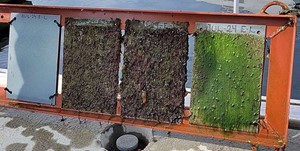
The problem: Marine biofouling on ships and underwater structures is traditionally controlled using toxic chemical biocides, which harm marine ecosystems and contribute to environmental pollution.
The Method: Researchers from the Norwegian University of Science and Technology developed graphene-based polymer nanocomposite coatings that prevent biofouling by physically damaging or deterring organisms on contact, eliminating the need for toxic chemicals.
Future Prospects: This eco-friendly approach could revolutionize marine maintenance, reducing environmental impact and enabling sustainable protection for ship hulls, offshore platforms, and other submerged structures.
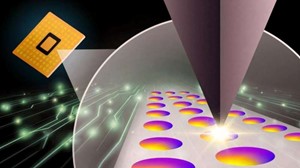
The Problem: Traditional data storage technologies face challenges in scaling down further while maintaining stability and energy efficiency at nanoscale dimensions.
The Method: The team used an AI‑assisted atomic force microscope tip to write and erase stable nanoscale polarization patterns in ferroelectric materials like bismuth ferrite, enabling reliable multistate memory without conventional electrodes.
Future Prospects: This technique could lead to next‑generation memory and computation systems with higher storage densities and lower energy requirements, advancing electronics and data‑intensive applications.
The World Economic Forum launched the Global Risks Report 2026 at the Annual Meeting in Davos, Switzerland, highlighting the evolving landscape of global threats. The report identifies geoeconomic confrontation, technological risks, and societal polarization as key challenges, emphasizing the need for strengthened multilateral cooperation and resilience in an increasingly uncertain world. The report frames 2026 as an “age of competition” where geopolitical rivalry, economic weaponization and fragmented global order challenge collective action.
Uncertainty is the defining characteristic of the global outlook, with half of surveyed experts expecting a turbulent or stormy landscape over the next two years, increasing over the long term.
Geoeconomic confrontation (economic state rivalry) has emerged as the top short‑term global risk, overtaking armed conflict and signaling heightened competition between nations.
Multilateral cooperation is weakening, as trust and transparency decline, protectionism rises and longstanding institutions face pressure.
Economic risks are intensifying, including concerns about downturns, inflation and asset bubbles, with collective economic threats rising sharply in severity.
Technological risks are growing, especially misinformation/disinformation and adverse outcomes associated with AI, which rise markedly in long‑term risk rankings.
Societal polarization and inequality remain deeply interconnected risks, contributing to institutional strain and public distrust.
Environmental risks are temporarily deprioritized in the short term but remain dominant over the next decade, with extreme weather and climate threats ranking high in long‑term severity.
We welcome your comments and valuable suggestions. Please write to us for receiving publications, up dates and notices regarding seminars, conferences etc. Contact us at science.diplomacy@ris.org.in.