In essence, 2025 marks a transition from foundational quantum discovery (celebrating 100 years) to tangible applications, driven by major research breakthroughs and global efforts to democratize this powerful new era of technology. S. K. Varshney writes.
India and Israel signalled a renewed push in their economic partnership, emphasizing deeper cooperation in trade, technology and investments. Both sides highlighted plans to boost collaboration in high-tech sectors such as cybersecurity, med-tech and deep-tech startups.
A delegation from Austria’s Technische Universität (TU) Graz visited IIT‑Kharagpur to explore joint research, student exchange, and collaborative academic programmes. The visit aims to deepen Indo‑Austrian ties in education and innovation.
This collaboration will play a key role in guiding policymaking and resilience-building globally especially in the final years of the Sendai Framework for Disaster Risk Reduction and the Sustainable Development Goals agenda by ensuring that science remains central to anticipating, preparing for, and managing evolving climate- and hazard-related risks.
Officials from Syria’s health ministry and the Indian Embassy met to deepen collaboration on healthcare, agreeing to send 14 Syrian doctors to India for training, explore joint pharmaceutical manufacturing, and supply Syria with cancer medicines while planning broader medical‑staff exchanges.
The UAE and South Korea signed a comprehensive joint declaration to deepen cooperation across advanced technology, including AI, semiconductors, cybersecurity and hyperscale data-centre projects. They also agreed to expand collaboration in space technology, defence, nuclear energy, healthcare, education and cultural exchanges.
The 4.5-hour self-paced course introduces foundational AI concepts using relatable Indian examples, making it accessible to students, professionals, and curious learners. It emphasizes ethical, responsible, and inclusive AI usage, aligning with India’s broader AI vision under the IndiaAI mission.
Quantum computers Jade and Ruby were inaugurated and integrated into supercomputing centres in Germany and France, marking a major step toward widespread quantum‑classical computing for applications like drug discovery, materials science and optimization.
Tata Consultancy Services has secured a $1 billion investment from global private equity firm TPG to scale up its HyperVault business, aiming to build gigawatt-scale AI-ready data centres. This strategic move marks TCS’s bold entry into capital-intensive infrastructure, with a combined commitment of up to ₹18,000 crore to support high-performance, sustainable data centre growth.
IIT Madras, in partnership with Indian Railways Finance Corporation (IRFC), established a Single-Cell Omics Translational (SCOT) Laboratory on campus with a CSR grant of ₹ 10.83 crore. The facility will support early disease diagnosis, biomarker discovery, drug screening, and precision medicine using cutting-edge single-cell biology tools.
Held from 24–28 November 2025 at the CSIR International Convention Centre, Pretoria, SFSA 2025 gathered over 6,000 participants including scientists, policymakers, innovators, entrepreneurs and civil-society representatives to debate how science, technology and innovation can shape government, education, industry and society.
The pre-summit dialogue organised by Centre of Policy Research and Governance (CPRG) with South Centre and IT for Change was held on 18 November 2025 in Geneva. The dialogue convened global experts, policymakers and civil-society leaders to discuss how to ensure inclusive, accessible and responsible Artificial Intelligence for countries in the Global South. It highlighted the need for greater AI literacy, teacher training, youth reskilling and context-adaptable tools, stressing that AI must be deployed as a practical, equitable resource rather than a privilege for a few.
IISc and Royce have signed a Letter of Intent to collaborate on 3D bioprinting, biofabrication and materials‑science research aiming to fast‑track innovation in healthcare, precision medicine and sustainable bio‑manufacturing.
The course, open for registrations, aims to upskill students and professionals in artificial intelligence and deep learning, boosting access to AI education and research.
Two-day ICGST‑2025 was held during 17-18 November at NIPER Mohali, drawing over 100 participants from institutions across India, Japan, Malaysia and Indonesia with 33 posters, 9 oral, 14 invited and 8 keynote presentations to discuss advances in sustainable science and technology.
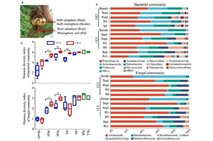
The problem: Soil-borne pathogens such as Fusarium oxysporum threaten crop health, causing significant yield losses. Traditional chemical pesticides can be harmful to the environment and may lead to resistance in pathogens.
The Method: Researchers engineered synthetic microbial communities (SynComs) composed of beneficial endophytic microbes that live inside plant tissues. These microbes promote plant growth and suppress harmful pathogens by enhancing natural plant defenses.
Future Prospects: This bio-control approach could reduce reliance on chemical pesticides, improve crop resilience, and lead to sustainable agricultural practices. It also opens the door for tailored microbiomes for different crops and environments.
The Problem: Next‑generation perovskite–silicon tandem solar cells, promising much higher efficiency (~35 per cent) than conventional silicon panels suffer major reliability issues over time because the ultra‑thin molecular interface layer degrades under heat, causing performance to drop.
The Method: Researchers at National University of Singapore (NUS) replaced the conventional molecular contact layer (a “self‑assembled monolayer” or SAM) with a novel, heat‑resistant cross‑linked molecular layer. The new layer “locks” itself into a sturdier network, preventing molecular rearrangement under high temperature, and preserving efficient charge transport between perovskite and silicon layers.
Future Prospects: With the improved design, tandem solar cells maintained over 96 per cent of their initial efficiency even after 1,200 hours at 65 °C, a step toward real‑world durability. The team aims to test these cells under harsh, tropical conditions and scale them up to module‑size panels suitable for widespread deployment.
INSIGHTS & RESOURCES
G20 South Africa Summit Leaders’ Declaration The G20 Summit 2025, hosted in Johannesburg, South Africa, focused on inclusive global growth, climate action, digital equity, and resilience for vulnerable countries. Leaders highlighted the importance of science, technology, and multilateral cooperation in addressing societal challenges. Key highlights from the G20 South Africa Summit Leaders’ Declaration included:
Early Warnings for All: Commitment to provide universal multi‑hazard early‑warning systems by 2027, prioritising vulnerable regions.
Disaster resilience financing: Integration of disaster-risk reduction into national policies, supporting nature-based solutions and insurance mechanisms.
Climate action & energy transition: Pledges for renewable energy expansion, energy efficiency, and mobilising climate finance for developing countries.
Electricity access in Africa: Mission 300 aims to provide electricity to 300 million Africans by 2030.
Critical-minerals framework: Ensuring sustainable, transparent, and resilient supply chains for minerals essential to clean energy and high-tech industries.
Digital inclusion & AI governance: Promoting equitable access to AI and emerging technologies with transparency, ethics, and responsible governance.
Food security & sustainable agriculture: Support for smallholder farmers, climate-resilient agriculture, and reducing food loss and waste.
Debt sustainability: Mechanisms to ease debt burdens and promote sustainable development finance in vulnerable economies.
Social protection & youth employment: Focus on universal social protection, gender equality, and reducing NEET rates through skills and entrepreneurship initiatives.
Global South & multilateralism: Elevating Global South priorities, advocating fairer global governance, and strengthening international cooperation on health, climate, and inequality.
We welcome your comments and valuable suggestions. Please write to us for receiving publications, up dates and notices regarding seminars, conferences etc. Contact us at science.diplomacy@ris.org.in.