Overall, BRICS scientific cooperation aims to tackle global challenges like climate change, energy efficiency, water treatment, and food security, improving quality of life using STI. In its Presidency, India aims to further strengthen scientific cooperation and introduce BRICS Science & Research Repository. S. K. Varshney writes.
The Indian Council of Agricultural Research (ICAR) and Argentina’s National Institute of Agricultural Technology (INTA) signed the Work Plan 2025‑27 to strengthen bilateral cooperation in agricultural research, digital agriculture, crop and animal biotechnology, and sustainable agronomy.
The International Bureau of Weights and Measures (BIPM) and UNESCO signed a renewed Memorandum of Understanding (MoU) in Paris, updating a partnership that originally began in 1949 to strengthen global scientific cooperation, especially in metrology—the science of measurement. The agreement aims to promote measurement science, support international cooperation, and integrate metrology into efforts toward the UN 2030 Sustainable Development Agenda.
During the Indian Prime Minister’s visit to Oman on 18 Dec 2025, India and Oman signed agreements to enhance scientific research cooperation, higher education exchanges, and agricultural innovation, including projects in integrated farming, horticulture, and millet cultivation. The partnerships aim to foster joint research, knowledge sharing, and technology-driven solutions in areas of mutual interest.
Japan Science and Technology Agency (JST) and the Agency for Innovative Development (AID) under Uzbekistan’s Ministry of Higher Education, Science and Innovations signed a Memorandum of Cooperation (MoC) at JST’s Tokyo headquarters. The agreement aims to strengthen scientific collaboration and researcher exchanges between Japan and Uzbekistan, fostering joint activities and partnerships in research and innovation.
During Prime Minister Narendra Modi’s visit to Ethiopia during 16–17 Dec 2025, India and Ethiopia agreed to elevate bilateral relations to a Strategic Partnership, with discussions spanning innovation, technology, education and capacity building. Both leaders reviewed cooperation across innovation and technology, and India voiced its willingness to step up collaboration in health security, digital health, sustainable agriculture, food security, natural farming and Agri‑tech
At the India–Jordan Business Forum in Amman, Prime Minister Narendra Modi and King Abdullah II highlighted opportunities for bilateral cooperation in digital public infrastructure, health‑tech, agri‑tech and IT, and discussed linking India’s digital frameworks (like UPI and DigiLocker) with Jordan’s systems to foster innovation and startup collaboration. Both sides also signalled potential partnership in pharmaceuticals, renewable energy and sustainable agriculture, reinforcing the S&T dimension of India–Jordan engagement.
Researchers at the University of Colorado Boulder have developed a microchip-sized optical device that precisely controls laser frequencies while using far less power, addressing a key technical hurdle for scaling up quantum computers. Made with standard chip manufacturing techniques, this innovation could enable mass production of components needed for larger, more powerful quantum machines.
Letter of Intent (LoI) was signed between the Jawaharlal Nehru Centre for Advanced Scientific Research (JNCASR), Bengaluru and CRISPRBITS Private Limited to jointly establish a Centre of Excellence for CRISPR Innovation and Translation (CoE‑CIT). This public‑private partnership aims to harness advanced CRISPR gene‑editing technologies to translate laboratory research into real‑world clinical and societal applications, bridging fundamental biomedical science with affordable, scalable diagnostics and therapeutic solutions.
The Scientific Steering Committee of India’s National One Health Mission (NOHM) met in New Delhi under the Chairmanship of the Principal Scientific Adviser, Prof. Ajay K. Sood, to assess progress and strengthen inter‑sectoral coordination across human, animal, and environmental health.
The 2nd European Science Diplomacy Conference ‘Bridging Divides in a Fragmented World’ was held on 17–18 December 2025 in Copenhagen, organised under the Danish Presidency of the Council of the EU and the European Commission to explore how science diplomacy can strengthen Europe’s competitiveness, foster innovation, and promote international cooperation in a fragmented global landscape. The hybrid event brought together policymakers, scientists, diplomats, civil society, and non-state actors to discuss strategies for enhancing Europe’s global role in science and technology while addressing geopolitical and societal divides.
The Summit was held 17–19 December 2025 in New Delhi, co-hosted by the World Health Organization (WHO) and the Government of India, under the theme “Restoring Balance: The Science and Practice of Health and Well-Being.” The event brought together policymakers, scientists, indigenous leaders, and practitioners from over 100 countries to strengthen evidence-based traditional, complementary, and integrative medicine, launch the WHO Traditional Medicine Global Library with 1.6 million resources, and secure commitments for integrating traditional medicine into health systems while promoting research, safety, and innovation.
Researchers from Bose Institute under the Department of Science & Technology (DST) reported that freshwater sponges and their microbial communities can act as effective bioindicators and absorbents of toxic metals like arsenic, lead, and cadmium, offering promising bioremediation solutions for polluted aquatic ecosystems.
The International Advanced Research Centre for Powder Metallurgy and New Materials (ARCI) under India’s Department of Science & Technology signed a Memorandum of Understanding (MoU) with Voltasun Technologies Pvt. Ltd. to validate and move toward commercialisation of sodium‑ion battery pouch cells developed from Sodium Vanadium Phosphate (NVP) material which is a safer and lower‑cost alternative to current lithium‑ion batteries. The collaboration will begin with supply and testing of prototype cells, advancing India’s homegrown energy‑storage innovations.
Scientists at the S. N. Bose National Centre for Basic Sciences have devised a sunlight‑activated photocatalytic approach using tailored covalent organic frameworks (COFs) to efficiently cleave one of the strongest chemical bonds, the carbon–fluorine (C–F) bond under mild, sustainable conditions. This breakthrough could transform processes in pharmaceutical and agrochemical industries by enabling greener synthesis and recycling of fluorinated compounds, traditionally requiring harsh and energy‑intensive conditions.
The Indian Space Research Organisation (ISRO) launched its heavy‑lift LVM3‑M6 rocket, deploying the BlueBird Block‑2 communications satellite for AST SpaceMobile into Low Earth Orbit, marking one of the heaviest commercial payloads ever placed from Indian soil and reinforcing India’s role in the global commercial space launch market. The satellite, part of a next‑gen constellation for direct‑to‑smartphone broadband connectivity, is expected to begin operations in the coming weeks.
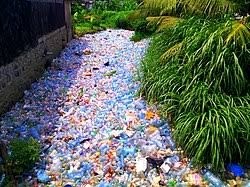
The problem: Plastic, especially polystyrene, is hard to recycle and often ends up as low-value waste. Traditional chemical recycling is inefficient, costly, and energy-intensive.
The Method: Researchers at Nanjing Forestry University and Tsinghua University recently introduced a new approach to convert polystyrene (PS), a plastic widely used to pack some foods and other products, into toluene, a hydrocarbon that is of value in industrial and manufacturing settings. Researchers use a two-step process: pyrolysis heats polystyrene into vapor, then a ruthenium single-atom catalyst converts it into high-purity toluene. This achieves high yield and selectivity while lowering carbon footprint. The process enabled the conversion of PS into toluene with a selectivity of over 99 per cent and a toluene yield of 83.5 per cent. Notably, the method also led to 53 per cent less carbon emissions compared to current strategies to produce toluene.
Future Prospects: The process could scale to large amounts of plastic, produce other valuable chemicals, and be improved with new catalysts for even better efficiency and control.
The Problem: Traditional aluminum alloys made by casting and conventional methods are relatively weak and limited in performance, especially for high-stress and high-temperature applications. Finding new metal alloys with superior strength usually requires simulating millions of combinations, which is slow and inefficient.
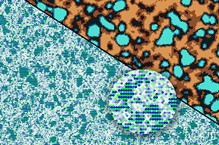
The Method: MIT team used machine learning to efficiently screen alloy compositions, narrowing millions of possibilities to about 40 promising candidates. They then 3D-printed the best one using laser-powder bed fusion (LBPF), which rapidly cools the metal and creates a dense microstructure of tiny precipitates that greatly increases strength. When tested, the 3D-printed aluminum alloy was roughly five times stronger than the same material made by conventional casting, and about 50 per cent stronger than alloys designed with traditional simulations. It also remains stable at high temperatures (~400 °C).
Future Prospects: The new alloy could enable lighter, stronger, and heat-resistant components in aerospace (e.g., jet engine fan blades), automotive parts, advanced cooling devices, and other high-performance applications. The research also opens the door for machine-learning design of other printable high-performance metals.
INSIGHTS & RESOURCES
India Unveils National Technology Readiness Assessment Framework (NTRAF) to Standardise Innovation Evaluation India’s Principal Scientific Adviser, Prof. Ajay Kumar Sood, launched the National Technology Readiness Assessment Framework (NTRAF) — a new, objective tool to assess the maturity of technology projects from early concept to commercial deployment, helping align researchers, industry and investors. Developed with the Confederation of Indian Industry (CII), the framework uses 9 Technology Readiness Levels (TRLs) to provide a structured, evidence‑based metric that aims to bridge the “valley of death” in tech translation and support more effective funding and scaling of innovations.
Key features include:
Standardised maturity scale: Covers TRL 1–9 from basic research to operational deployment.
Evidence‑based evaluation: Replaces subjective readiness claims with structured, verifiable checkpoints.
Sector nuances: Includes specialised annexures for domains like healthcare, pharmaceuticals and software.
Self‑assessment tool: Enables project teams to self‑gauge readiness and identify gaps before seeking funding.
The framework is open for public consultation until 31 January 2026 to refine and integrate it across India’s research and innovation ecosystem.
We welcome your comments and valuable suggestions. Please write to us for receiving publications, up dates and notices regarding seminars, conferences etc. Contact us at science.diplomacy@ris.org.in.